The Strategic Marking Decision Every Modern Job Shop Must Make
Job shops face a critical process decision: stick with low-cost ink and labels that can degrade during production -- or invest in permanent laser marking. While traditional methods introduce risks of unreadable codes and line stoppages, laser marking with integrated 3D vision creates a reliable, automated workflow. It eliminates consumables and manual rework, ensuring flawless, lifelong part traceability. But is it worth the capital cost?
In modern industrial manufacturing, marking a part is rarely just about compliance or aesthetics. It is a critical link in the chain of automation, quality control, and long-term traceability. For decades, manufacturers viewed direct part marking (DPM) as a localized, isolated task at the end of a production line. However, as factories shift toward fully automated inspection stations and data-driven supply chains, the vulnerability of traditional marking methods is becoming impossible to ignore.
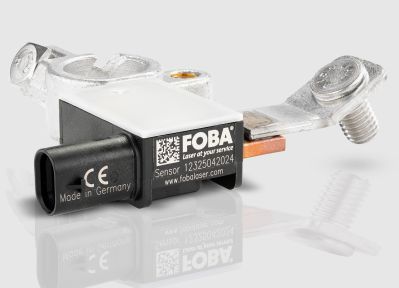
On this automotive sensor, the label has been replaced by a laser mark. (All images courtesy FOBA Laser Marking + Engraving)
The true value of a direct part mark is not determined by its crisp appearance immediately after application. Instead, its worth is proven by its stability as the component navigates the harsh environments of the factory floor and the unpredictable lifespan of its field service. For heavy industries, medical device manufacturing, automotive assembly, and electronics, choosing how to mark metal parts is a foundational process decision that directly impacts overall production throughput, operational costs, and scrap rates.
The Hidden Cost of Surface-Level Marking
Traditional marking methods -- such as ink printing, pad printing, and adhesive labeling -- remain popular for good reason. They are familiar, require relatively low upfront capital investment, and can keep pace with blazing line speeds. These methods rely on applying an external layer of material onto the surface of a part.
While effective on pristine, static surfaces, this surface-layer approach introduces severe limitations when applied to precision metal components or industrial assemblies. During the manufacturing cycle, parts frequently undergo:
- Intensive chemical cleaning stages
- High-temperature curing or degreasing cycles
- Intense mechanical friction during automated transport
- Heavy exposure to industrial lubricants and cutting fluids
Engineering Permanence: Why Metals Demand Laser Technology
To survive intense processing environments, industrial manufacturers are increasingly turning to industrial laser technology for direct part marking. Unlike printing methods that deposit foreign material onto a surface, lasers alter the material itself to generate the code or text.
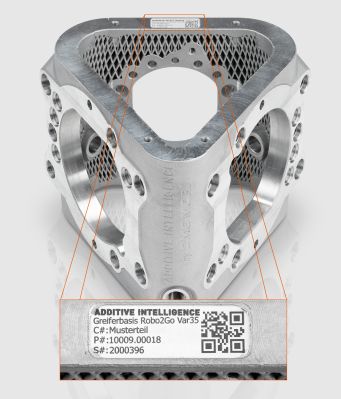
The laser marking on the DMG MORI robot head plays a key role in enabling a fully digitalized and automated production process.
On metal parts, this is achieved through precise sub-surface modification. By deploying specialized laser wavelengths and adjusting parameters like pulse duration and power output, the laser can execute clean annealing or engraving.
Annealing Metals
Annealing uses localized, controlled heat input to draw carbon to the surface of metals like stainless steel or titanium. This creates a permanent, high-contrast black mark just beneath the surface oxide layer. The structural integrity of the metal is preserved, the surface remains perfectly smooth, and the mark cannot be scratched off, dissolved by solvents, or worn away by mechanical abrasion.
Overcoming Material Sensitivity
The challenge of marking metal parts often deepens when working with sensitive alloys or complex hybrid components, such as engineering plastics bonded to metal housings. Standard laser systems risk introducing excessive heat, which can warp thin-gauge metals or cause micro-fractures.
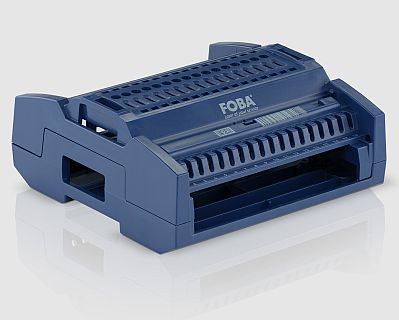
High-contrast laser marking on multiple levels of a plastic component, applied with the FOBA Y.0202 fiber laser. A durable alternative to ink printing or labeling.
Recent advancements in short-wavelength UV lasers have solved this challenge. These systems mark sensitive and low-absorption materials with minimal heat input, achieving high-contrast results without altering the structural properties of the base substrate.
Moving from Isolated Steps to Closed-Loop Workflows
The mechanical differences between a laser beam and an inkjet nozzle are only part of the equation. The true operational leap occurs in how the marking step integrates into the digital architecture of the factory floor. Leading solutions treat direct part marking as an intelligent, closed-loop workflow rather than an isolated mechanical operation.
In a traditional setup, a part must be mechanically clamped into a fixed orientation so a print head can target it accurately. If the part is slightly misaligned, the mark is ruined. Modern laser marking systems bypass this mechanical constraint by integrating an advanced 3D vision system directly into the laser marking head.
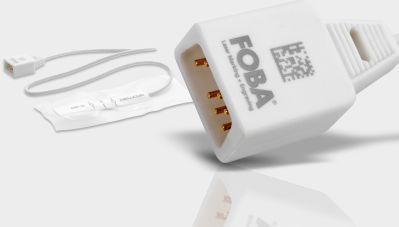
Laser marked connector for medical technology.
By utilizing a shared optical path, the internal camera and the laser beam share the exact same line of sight to the product surface. This unified vision system unlocks a highly stable, automated workflow.
Because both the vision hardware and the laser source are governed by a single software interface, operators manage the entire sequence seamlessly. This reduces human error and ensures that defective marks are caught, flagged, and segregated instantly, preventing bad data from contaminating downstream operations.
Evaluating the Long-Term Return on Investment
When evaluating a transition from traditional printing to direct laser marking, the initial hurdle is almost always capital cost. The upfront investment required for an industrial-grade laser system equipped with integrated vision capabilities is significantly higher than that of an industrial inkjet or labeling station.
However, forward-thinking manufacturers look past the initial purchase price to analyze the total cost of ownership (TCO) and overall equipment effectiveness (OEE). The financial calculations shift dramatically when accounting for the ongoing hidden costs of conventional printing:
- Consumable Expenses: Ink, solvents, ribbons, and labels represent a continuous operational expense that scales with production volume.
- Maintenance Downtime: Inkjet systems require frequent maintenance to clear clogged nozzles, refill fluids, and manage drying systems, leading to costly, unplanned production halts.
- Rework and Scrap: Poorly printed or smudged codes cause automated line rejections, forcing manual inspection, re-printing, or the scrapping of valuable machined parts.
Laser systems require no consumables. Once dialed in, they operate continuously with minimal maintenance, removing the logistical headache of fluid storage and hazardous waste disposal.
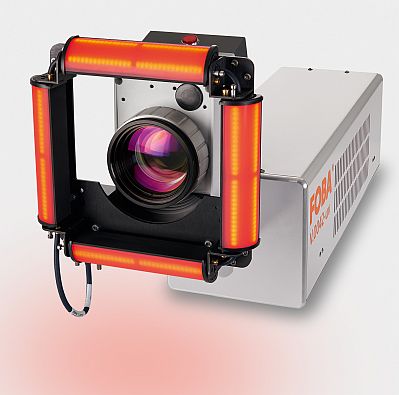
The FOBA V.0042-uv UV laser was developed for material-friendly, high-contrast marking.
By eliminating manual interventions and drastically reducing scrap rates caused by unreadable codes, the laser workflow creates a highly predictable, repeatable production process. The initial capital expense is rapidly offset by immediate operational savings, improved uptime, and the elimination of expensive product recalls triggered by failed traceability.
When treating marking as an integral component of process engineering, manufacturers can protect their automation investments, eliminate costly line disruptions, and ensure every metal part leaving the facility carries a permanent, indelible digital identity.
Want more information? Click below.
Rate this article
View our terms of use and privacy policy